



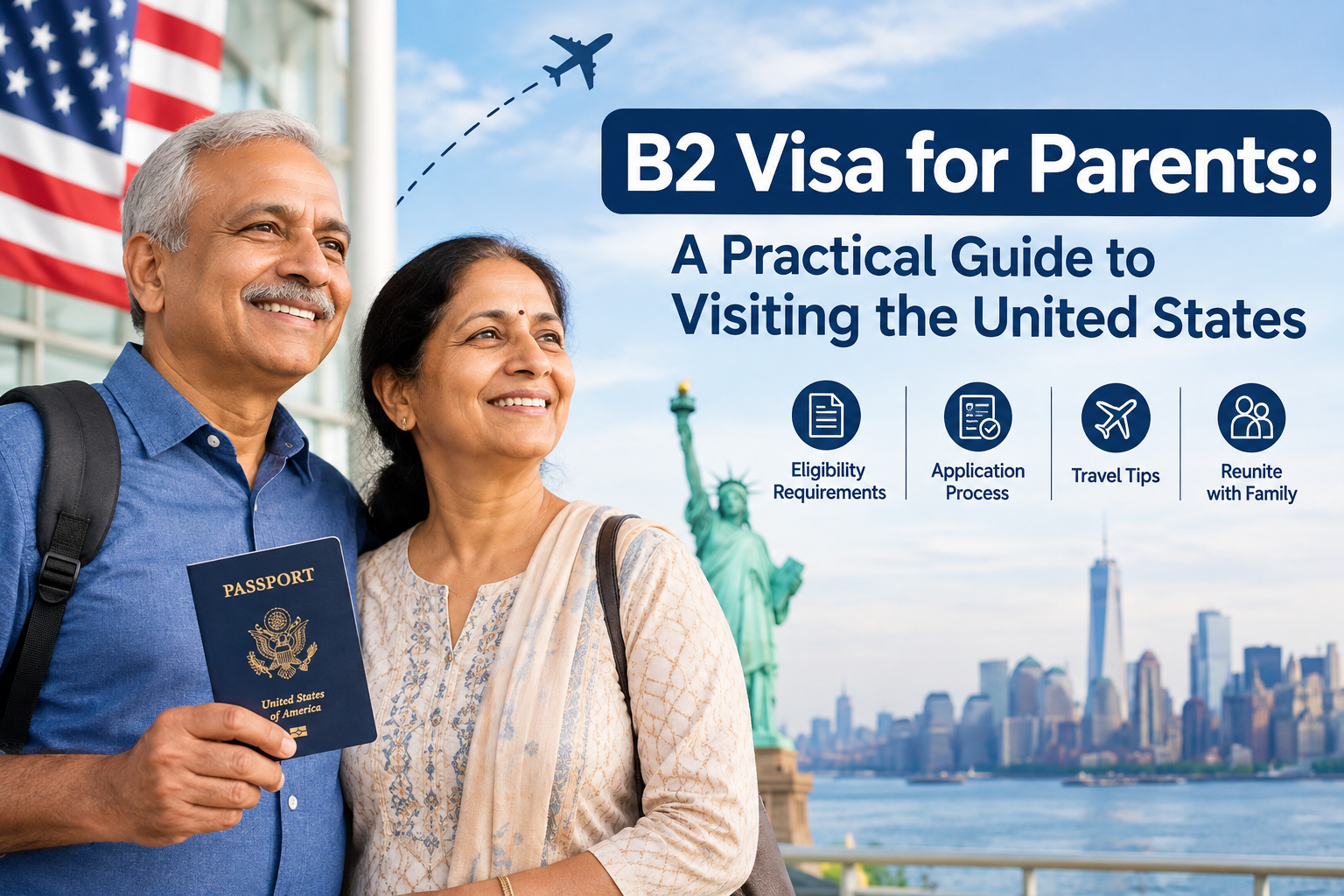
For families living in the United States, having parents visit for an extended stay can be an important way to spend meaningful time together. Whether parents want to attend a family celebration, meet grandchildren, or simply enjoy a temporary visit, understanding the immigration process is essential. The B2 visa for parents is commonly used for temporary visits to the United States for tourism or visiting family members.
Although the B2 visa is a nonimmigrant visa, applicants must demonstrate that their visit is temporary and that they intend to return to their home country. Proper preparation, accurate documentation, and a clear understanding of the application process can help applicants approach their visa interview with greater confidence.
What Is a B2 Visa?
The B2 visa is a U.S. visitor visa intended for temporary tourism, vacations, visits with relatives or friends, and certain other short-term purposes. Parents who want to visit their children in the United States may apply for a B2 visa when their purpose is consistent with visitor-visa requirements.
A B2 visa does not provide permanent residence or authorization to work in the United States. The applicant must generally establish that the proposed trip is temporary and that they have compelling reasons to return home after the visit.
Applying for a B2 Visa for Parents
The process generally begins with completing the required online nonimmigrant visa application and paying the applicable visa fee. Applicants may then schedule a visa interview at the appropriate U.S. embassy or consulate, subject to the procedures applicable in their country.
Parents should prepare information explaining:
- The purpose of their planned visit
- The expected duration of their stay
- Their financial circumstances
- Their family and social connections in their home country
- Their travel history, when relevant
- Their plans to return after the temporary visit
Supporting documents can help explain the circumstances of the trip, although applicants should understand that presenting a large number of documents does not automatically guarantee visa approval.
Demonstrating Strong Ties to the Home Country
One of the most important considerations in a visitor visa application is whether the applicant can demonstrate that they have sufficient reasons to return home.
For parents, these ties may include employment, business responsibilities, property, financial commitments, immediate family members, community relationships, or other ongoing obligations. The strength and relevance of these circumstances can vary significantly from one applicant to another.
Applicants should answer questions honestly and consistently. They should not exaggerate their financial situation, create documents, or provide misleading information simply to strengthen an application. Misrepresentation can create serious immigration consequences.
Can Children in the U.S. Sponsor Their Parents’ Visit?
A U.S.-based child may help parents prepare for a temporary visit by providing information about where the parents will stay and how expenses may be handled. In some circumstances, a child may also provide an invitation letter or financial documentation.
However, having a child in the United States does not by itself guarantee approval of a B2 visa. The parents remain the visa applicants, and they must satisfy the requirements applicable to temporary visitors.
The purpose of the trip should therefore be clearly explained, and the overall circumstances should demonstrate that the visit is genuinely temporary.
When Professional Immigration Guidance Can Help
U.S. immigration rules can be complicated, particularly when a family has multiple immigration matters occurring at the same time. Professional guidance can help families understand the requirements and identify potential issues before submitting an application.
For example, someone working in the United States on an H-1B visa may need specialized assistance from an H1B visa attorney NYC when dealing with employment-based immigration matters, extensions, changes of employer, or other H-1B-related issues.
Similarly, professionals or individuals from eligible countries may have questions about the TN classification. A TN visa attorney NYC can help qualified Canadian or Mexican professionals understand the requirements for temporary employment in the United States under the TN category.
These employment-based immigration matters are different from a B2 visitor visa. Keeping the purpose and requirements of each visa category clearly separated is important.
B2 Visa vs. Employment-Based Visas
The B2 visa and employment-based classifications serve very different purposes.
A B2 visa is generally intended for temporary visits such as tourism or visiting relatives. It does not authorize employment in the United States.
The H-1B classification, on the other hand, is designed for qualifying specialty-occupation employment with an appropriate U.S. employer. Individuals considering H-1B status should understand the specific requirements associated with their employment and immigration circumstances.
The TN classification is another employment-based option available to certain qualified professionals who meet the applicable requirements under the U.S.-Mexico-Canada Agreement framework.
Because these categories have different eligibility rules and restrictions, selecting the appropriate immigration pathway is essential.
Preparing for the Visa Interview
Parents applying for a B2 visa should be prepared to explain their trip clearly and concisely. Typical questions may address the reason for traveling, the length of the planned stay, the relationship with family members in the United States, and circumstances in the applicant’s home country.
Applicants should avoid memorizing complicated answers. Instead, they should understand their own application and provide truthful responses.
It is also important that the information provided during the interview is consistent with the application and supporting documentation. If circumstances have changed since an application was prepared, applicants should be prepared to explain those changes accurately.
Common Mistakes to Avoid
Several mistakes can make a visitor visa application more complicated. Applicants should avoid submitting inaccurate information, concealing previous immigration issues, providing inconsistent answers, or assuming that an invitation from a U.S. family member guarantees approval.
Another common mistake is misunderstanding the difference between visiting and immigrating. Parents who genuinely intend to remain permanently in the United States may need to explore a different immigration pathway rather than attempting to use a visitor visa for a permanent move.
Every immigration case is different, so applicants should consider their individual circumstances before deciding how to proceed.
Get Guidance for Your U.S. Immigration Matter
Whether you are helping your parents apply for a B2 visa for parents or dealing with your own employment-based immigration matter, understanding the applicable visa category is an important first step. Temporary visitor visas, H-1B classifications, and TN classifications each have distinct eligibility requirements and limitations.
The Law Offices of Prashanthi Reddy, PLLC provides immigration legal guidance to individuals and families navigating U.S. immigration matters. Professional assistance can help applicants better understand their options, prepare appropriate documentation, and identify potential issues based on their circumstances.
Because immigration rules and procedures can change, applicants should obtain current legal guidance before making important immigration decisions. A qualified immigration attorney can evaluate the specific facts of a case and explain the available options based on current U.S. immigration law.

Comments are closed.